
Quick summary:
-
Dust, pollen, and mineral buildup can measurably reduce solar panel output, with losses varying by climate and cleaning interval.
-
Las Vegas, NV’s dry, dusty desert conditions make periodic panel cleaning a practical maintenance step rather than a cosmetic one.
-
Routine cleaning helps protect long-term panel performance and may support the system’s expected service life.
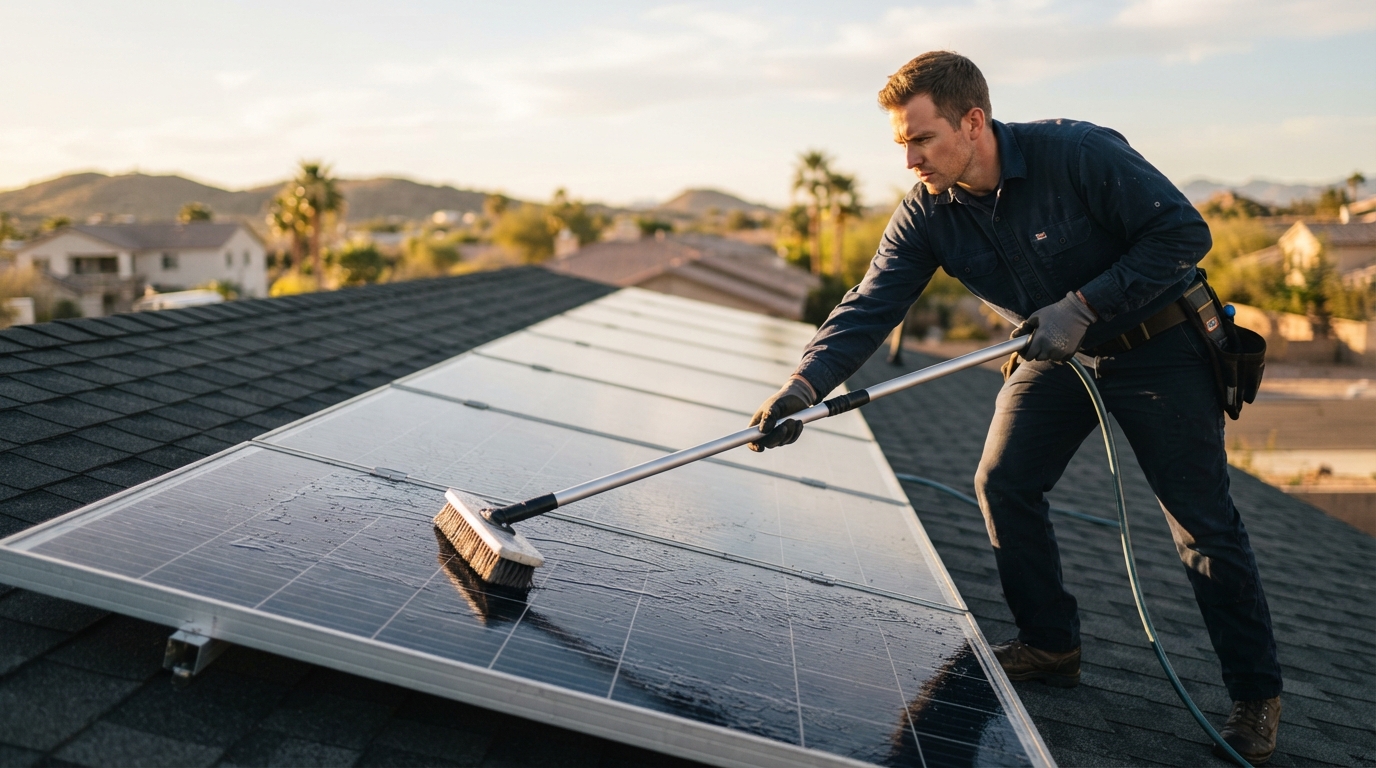
Dirty solar panels produce less electricity because dust, pollen, and mineral residue block sunlight before it reaches the photovoltaic cells. Regular solar panel cleaning in Las Vegas, NV removes that buildup so panels can convert available sunlight into power more consistently, which matters most in dry, dust-prone regions like Las Vegas, NV.
Soiling is not a minor cosmetic issue. A peer-reviewed systematic review found that soiling can result in efficiency losses of about 6–7% in a matter of months and more than 20–30% over extended exposure, with reductions of up to 34% reported at dust loads of about 10 g/m^2. In arid climates where rainfall is infrequent, that buildup has no natural way to wash off.
How Dust and Debris Reduce Panel Output
Solar cells rely on direct exposure to sunlight. A layer of dust, pollen, or airborne particulate creates a physical barrier that scatters and absorbs light before it reaches the cell surface.
-
Fine desert dust and silt particles are common contributors to soiling in arid and semi-arid climates, including regions comparable to the Las Vegas area, according to the International Energy Agency’s PVPS soiling report.
-
Bird droppings, pollen, and construction dust can create uneven shading patterns that affect entire strings of cells rather than isolated spots.
-
Without natural rainfall to rinse panels, soiling accumulates steadily over weeks or months rather than resetting after each storm.
Research on cleaning frequency also shows that infrequent cleaning allows losses to compound. Extended cleaning intervals accelerate dust-induced performance degradation, which means the longer panels go without attention, the steeper the output decline becomes.
Why This Matters More in Las Vegas, NV
Las Vegas, NV sits in a desert environment where wind-blown dust, low annual rainfall, and long dry stretches combine to accelerate soiling compared to wetter regions. Homeowners and businesses with rooftop solar in the area often notice gradual output decline simply because natural rainfall rarely provides a reliable cleaning cycle.
A comparative study on soiling dynamics under different dust environments found that cleaning effectiveness and resulting losses are strongly influenced by the physical and chemical properties of the local dust, meaning desert soil composition in the Southwest behaves differently than soiling in coastal or temperate regions. This reinforces why a cleaning routine suited to desert conditions is more relevant locally than generic national advice.
Cleaning Frequency and Performance: A Practical Comparison
|
Cleaning Interval |
Typical Soiling Impact |
Best Suited For |
|
Natural rainfall only |
Highest risk of accumulated loss in dry climates |
Regions with frequent, consistent rain |
|
Quarterly cleaning |
Moderate buildup between services |
Moderate-dust suburban areas |
|
Biannual cleaning |
Lower sustained output loss |
Desert climates like Las Vegas, NV |
|
No cleaning for a year or more |
Compounding losses over time |
Not recommended in arid regions |
This table reflects general patterns described in soiling research rather than guaranteed results, since output impact depends on panel tilt, local dust composition, and seasonal weather. Property owners should treat it as a starting point for planning rather than a fixed schedule.
Protecting Long-Term Panel Lifespan
Beyond short-term output, residue left on panels for long periods can bake onto the glass surface, making it harder to remove without more aggressive methods later. Consistent, gentle cleaning reduces the chance of residue hardening and helps maintain the glass surface condition that solar manufacturers design panels to rely on. Avoiding abrasive tools or high-pressure settings during cleaning also helps prevent micro-scratches that could affect light transmission over the panel’s service life.
Frequently Asked Questions
How often should solar panels be cleaned in a desert climate? Soiling research suggests biannual or quarterly cleaning is often more appropriate in dry, dusty regions than annual cleaning, since dust accumulates steadily without rainfall to rinse it away.
Does dust really make a measurable difference in energy output? Yes. Peer-reviewed soiling studies have measured efficiency losses ranging from single digits after a few months to over 30 percent under heavy, prolonged dust exposure.
Can cleaning solar panels too often cause damage? Excessive or improper cleaning, particularly with abrasive materials or high pressure, can scratch panel glass, so gentler, appropriately spaced cleaning is generally recommended over very frequent scrubbing.
Is professional cleaning necessary, or can panels be cleaned at home? Rooftop access, panel fragility, and water/electrical safety considerations make professional cleaning a safer option for many homeowners, especially on angled or hard-to-reach roof sections.
Local Service Availability
Based in USA, Powell Window Cleaning serves customers across Las Vegas, NV, offering window cleaning, pressure washing, and solar panel cleaning services. Details on the business are available through its Powell Window Cleaning profile.
Published service details for Powell Window Cleaning Solar Panel Cleaners cover panel cleaning options available to Las Vegas, NV area properties.