
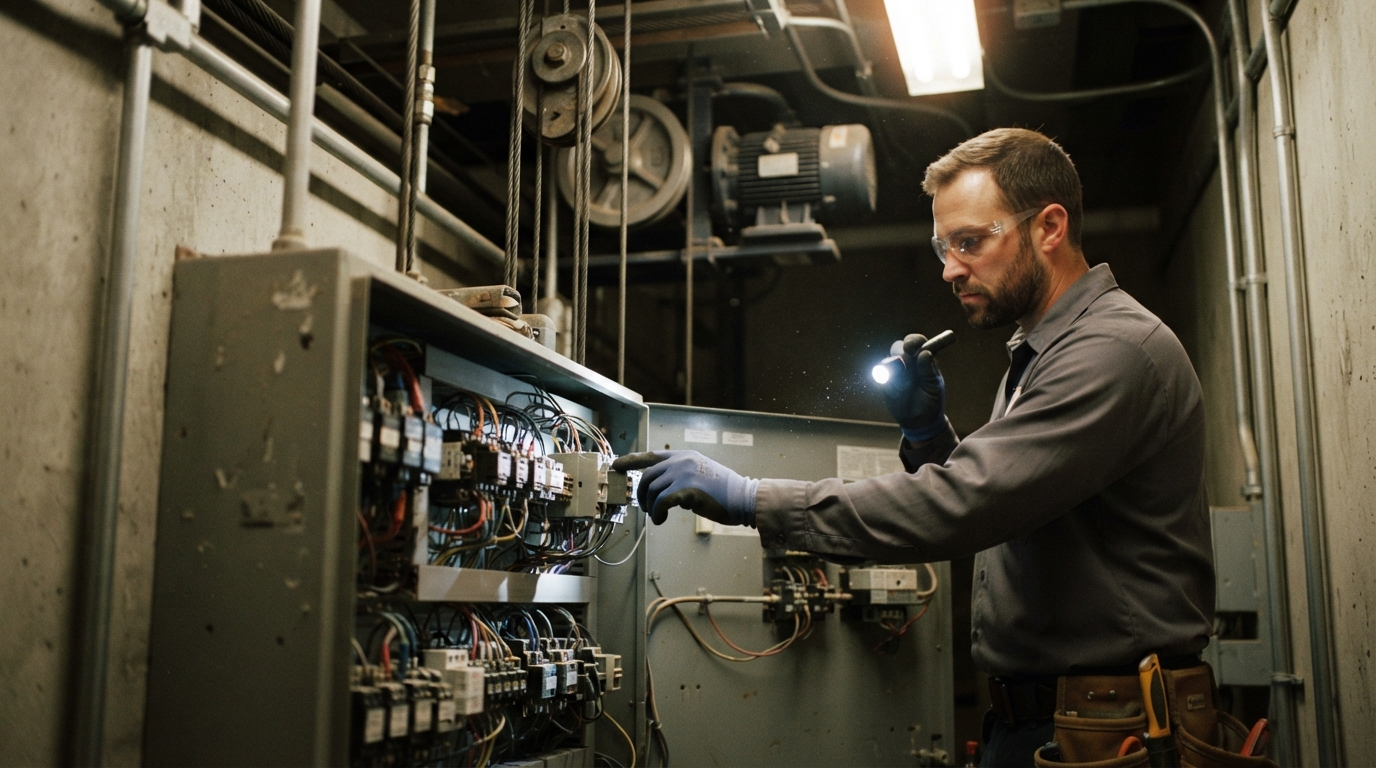
• Elevator inspections confirm that safety devices, cables, and control systems meet code before equipment fails or traps passengers.
• New Jersey elevators follow inspection intervals set by state code, with most commercial units inspected at least annually and escalators every six months.
• Building owners who skip required testing risk fines, failed certificates of occupancy, and liability after an incident.
A scheduled Elevator Inspection checks the mechanical, electrical, and safety systems of a vertical transportation unit against state and national code requirements before certification is renewed. The process matters because elevators carry people in a confined space, and a worn cable, faulty door sensor, or failed brake can turn a routine ride into an emergency. For property managers and homeowners in New Jersey, understanding what these inspections cover and how often they’re required helps avoid violations and keeps tenants safe.
New Jersey’s elevator rules are set by the Department of Community Affairs under the state’s elevator safety subcode. Inspection intervals for ASME A17.1 elevator devices other than escalators are not to exceed those set in Appendix N-1 of ASME A17.1, though cyclical inspections are not required more frequently than once a year. Escalators require periodic inspections at intervals of not more than six months. These intervals apply broadly, though some residential exemptions exist depending on building classification.
Who Can Legally Perform an Inspection
New Jersey law restricts who may sign off on elevator work. A qualified elevator device inspector cannot act in that capacity when his own work on the elevator device is the work being inspected. This separation of duties is designed to prevent conflicts of interest between maintenance and certification.
Inspection firms also carry specific licensing obligations:
• A firm engaged in maintaining, inspecting, and testing elevator devices must employ at least one qualified elevator device inspector and carry general liability insurance of at least $4,000,000 per person and occurrence to qualify for state registration.
• A qualified elevator device inspector, when employed by a qualified firm, performs and certifies by signature the inspection and tests required under the subchapter.
• Registration certificates are valid for a fixed period and can lapse if the firm stops performing inspection work.
What Gets Checked During Testing
Elevator inspections generally fall into categories tied to how deeply the system is examined. Annual Category 1 testing reviews routine operating components, while Category 5 testing (required on a longer cycle) involves full-load and safety-device testing that takes the unit out of service temporarily. A Qualified Elevator Inspector (QEI) credential is the industry standard for professionals authorized to conduct and certify these exams.
|
Inspection Type |
Typical Frequency |
Focus Area |
|
Routine/Category 1 |
Annual |
Controls, doors, alarms, lighting |
|
Category 5 |
Multi-year cycle |
Full-load safety and braking systems |
|
Escalator periodic |
Every six months |
Step mechanisms, handrails, comb plates |
Residential buildings sometimes fall outside these cycles. Elevator devices in structures of Group R-3, R-4, or R-5, except those accessible to the public, are exempt from periodic inspection and test requirements. That exemption matters for single-family homes with private lifts, though commercial and multi-unit residential buildings in New Jersey remain fully subject to the standard cycle.
Why Skipping Inspections Carries Real Risk
An elevator that misses its inspection window can be flagged with a violation, and in many municipalities that notice affects a building’s certificate of occupancy. Beyond paperwork, deferred inspections mean worn components go undetected longer, raising the odds of a door malfunction or an unplanned shutdown. Further technical background on inspection standards and testing procedures is available through ASME’s elevator and escalator safety code resources, which publish the A17.1 standard referenced throughout state regulations.
Elevator Testing and Inspection Services is one provider serving customers across New Jersey, offering testing coordinated with jurisdictional filing requirements.
Frequently Asked Questions
How often does a commercial elevator need inspection in New Jersey? Commercial elevators typically follow the cyclical schedule set in ASME A17.1, which caps routine inspections at no more frequently than annually, while escalators are checked every six months.
Does a home elevator need a yearly inspection? Elevator devices in Groups R-3, R-4 and R-5 that are not accessible to the public are exempt from periodic inspection and from registration.
Who is authorized to certify an elevator inspection in New Jersey? Only a qualified elevator device inspector employed by a registered firm meeting the state’s insurance and staffing requirements can certify the required tests.
What happens if a building misses its scheduled inspection? Missed inspections typically result in a violation notice from the local construction office and can delay certificate renewals until testing is completed and filed.
Business Info and Final Notes
Current availability details for Elevator Testing and Inspection Services are published for the local service area.