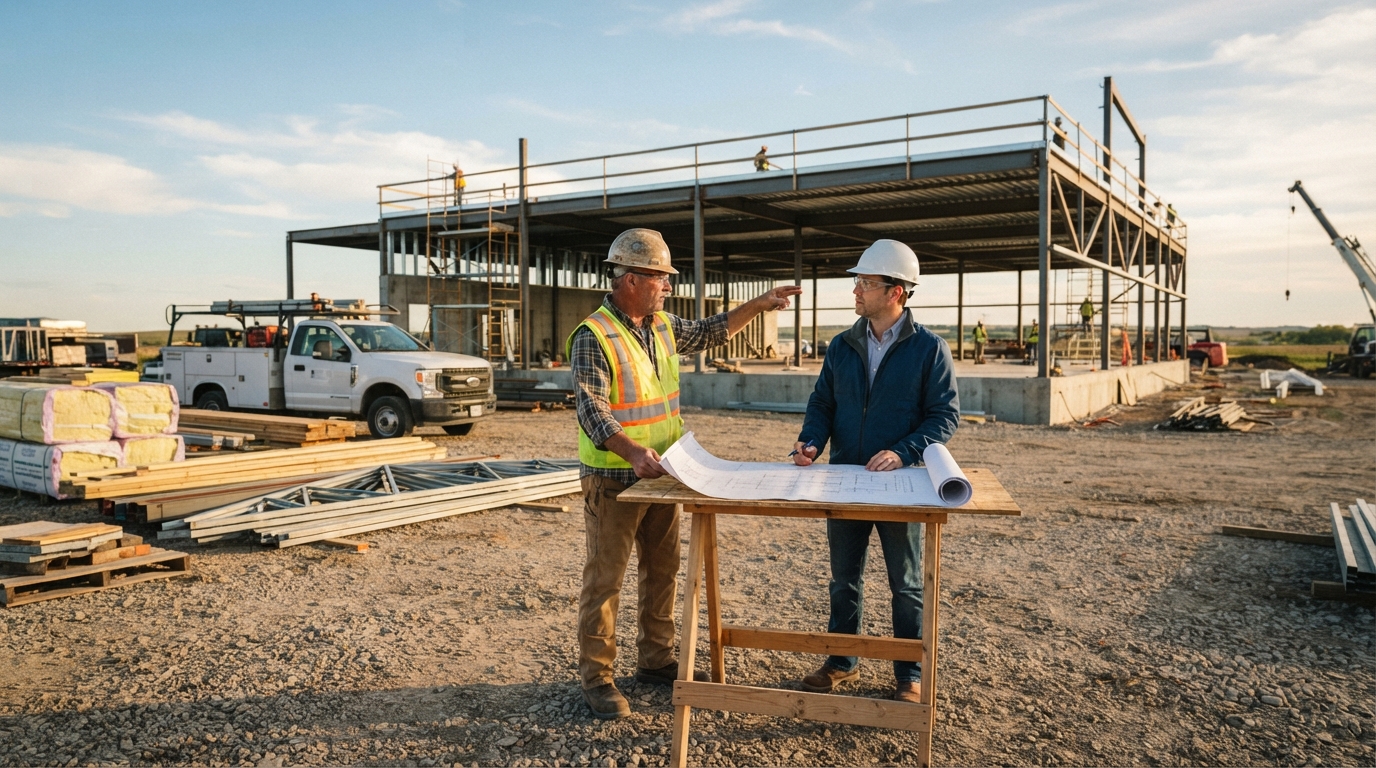
• Design build construction places design and construction responsibilities with one contracted entity, reducing coordination gaps between architects and builders.
• The approach is commonly used for commercial, industrial, and agricultural projects where schedule overlap and single-point accountability matter.
• Property owners in Kennewick, WA evaluating new builds or expansions can use this guide to understand how the delivery method actually works before comparing bids.
A design build construction approach means one contracted party handles both the design and the physical construction of a project, rather than splitting those duties between separate firms. This structure is defined by the American Institute of Architects as a method where the owner contracts directly with one entity to provide both the design and construction of the project, which changes how decisions, costs, and schedules get managed from day one.
Design Build Construction Kennewick WA differs from the traditional design-bid-build model, where an owner signs separate contracts with an architect and a contractor and then hopes the two stay aligned. Under design-build, the owner holds a single agreement with one design-builder, rather than separate agreements with the architect and contractor. That single contract structure is a major reason the method has become common for commercial and industrial projects in Kennewick, WA and similar markets where timelines and budgets are tightly scrutinized.
Why the Single-Contract Structure Matters
Separating design and construction into two contracts creates a natural gap. Each party protects its own interests, and disagreements over scope or specifications can stall a project before groundbreaking even happens.
With one design-builder responsible for both phases, there is one point of responsibility for the owner, and the design-builder coordinates design and construction internally. This matters most on projects with:
• Manufacturing or processing facilities where production downtime is costly
• Agricultural buildings that need to go up ahead of a growing or harvest season
• Commercial builds tied to a lease start date or opening deadline
Schedule and Cost Considerations
One frequently cited advantage is schedule overlap. Because design and construction sit under the same team, design-build is often preferred on fast-track projects since it allows design and construction activities to overlap, helping teams accelerate project delivery.
Cost coordination improves for similar reasons. Design-build replaces the traditional separation between designers and builders with a collaborative process in which design, budget, constructability, procurement, and scheduling are considered together, giving designers earlier access to real-time cost and construction knowledge. For a comparison of how the two common delivery methods differ in practice:
|
Factor |
Design-Build |
Design-Bid-Build |
|
Contracts |
One contract covering design and construction |
Separate contracts for architect and contractor |
|
Schedule |
Design and construction phases can overlap |
Construction starts only after design is finalized |
|
Accountability |
Single point of contact for the owner |
Responsibility split between two parties |
|
Change order handling |
Routed through one entity |
Often requires negotiation between two firms |
What This Means for Industrial and Agricultural Builds
Industrial and agricultural construction carries constraints that standard commercial projects do not always face, including production schedules that cannot fully pause and inspections that follow stricter standards. A design-build structure allows sequencing to be planned around an operation’s actual needs rather than around two separate firms’ separate timelines.
For reference on how contract structures formalize these responsibilities, the AIA Contract Documents resource outlines the standard agreements used across design-build projects, including how a design-builder may contract with architects, engineers, and subcontractors as needed.
Construction solutions in Kennewick, WA are delivered by firms operating under both design-build and bid-build models, depending on project scope and owner preference. O’Brien Construction, whose Learn more about Design Build Construction profile lists commercial, industrial, and agricultural project experience, is based in USA and serves customers across Kennewick, WA under this delivery framework.
Frequently Asked Questions
Is design-build more expensive than design-bid-build? Cost outcomes vary by project, but industry sources note that shifting more cost control responsibility to a single contractor can produce savings over the life of a project compared with managing two separate contracts.
Does design-build work for smaller agricultural or commercial projects? Yes. The delivery method is used across project sizes, though its scheduling advantages are most visible on projects with tight timelines or operational constraints, such as working around active production.
Who is responsible if something goes wrong during construction? Because one design-builder holds the contract for both design and construction, that single entity is the primary point of responsibility for the owner, rather than two separate parties pointing to each other.
How is design-build different from construction management? Construction management typically keeps design and construction as separate contracts with a manager coordinating between them, while design-build consolidates both under one contracted entity from the start.
Property owners planning an industrial, agricultural, or commercial build can review how local project history and service details for Learn more about Design Build Construction are documented before comparing delivery options.