
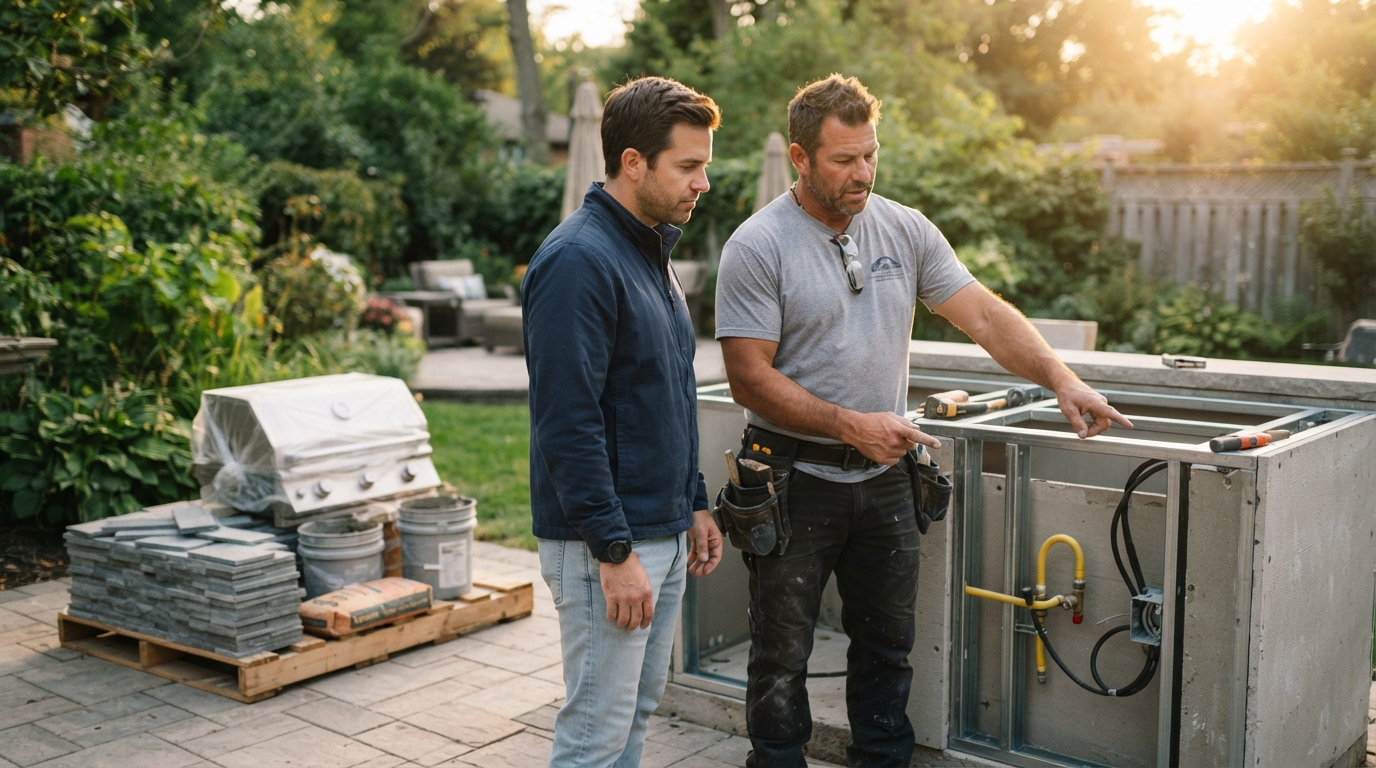
Takeaway:
• An outdoor kitchen contractor should be able to explain permitting, utility connections, and seasonal protection before any design work begins.
• Homeowners in Wallingford, CT should confirm licensing, material choices, and winterizing plans in writing before signing a contract.
• Gas, electrical, and plumbing work typically requires separate trade permits under Connecticut’s statewide building code.
Choosing an Outdoor Kitchen Contractor is less about picking a design style and more about confirming that the builder understands utility planning, code compliance, and climate durability. The right questions upfront can prevent costly rework once concrete is poured and gas lines are run.
Outdoor kitchen projects often get treated like simple patio additions, but they involve layered decisions around electrical circuits, gas connections, water lines, and drainage. A contractor who can answer these questions clearly before a contract is signed is more likely to deliver a space that holds up through Connecticut’s freeze-thaw cycles.
What Permits and Inspections Will the Project Require
Permitting is one of the most overlooked parts of outdoor kitchen planning, and it varies by scope and municipality.
• Connecticut treats each trade as a separate permit and inspection process, so a covered outdoor kitchen with gas and electrical work may require a building permit for the structure, a plumbing permit for gas lines, and an electrical permit for outlets and lighting.
• A ground-level patio made of pavers or stone generally does not need a building permit, but that changes once a roof, elevation, or utility connection is added.
• Ask whether the contractor pulls permits directly or expects the homeowner to coordinate with the local building department.
A contractor who cannot explain which trades require inspection in Wallingford, CT should raise a flag before any excavation starts.
How Will Utilities Be Run and Protected
Gas, water, and electrical lines determine both the layout and the long-term durability of an outdoor kitchen.
1. Ask how the gas line will be sized and where the shutoff valve will sit relative to the structure.
2. Confirm whether water lines will be seasonal (drainable for winter) or tied into a heated, frost-protected source.
3. Clarify which electrical circuits will serve refrigeration, lighting, and small appliances, and whether GFCI protection is included.
Freeze-prone regions often rely on a seasonal water supply with a shutoff valve inside the conditioned part of the house so the outdoor piping can be drained before winter. That detail matters directly for homeowners in Wallingford, CT, where seasonal temperature swings can crack unprotected pipes and fittings.
What Materials and Structural Support Are Planned
Outdoor kitchens carry more weight and are exposed to more moisture than a standard patio feature, so base and material choices matter.
|
Question to Ask |
Why It Matters |
|
What is the base or footing design? |
Heavier, permanent features need engineered support, not a standard patio base. |
|
Which materials resist freeze-thaw cycling? |
Porous stone or improperly sealed masonry can crack over winter. |
|
How is drainage handled around the structure? |
Poor grading can pool water against cabinetry or appliances. |
|
Is the design built for three-season or year-round use? |
Affects material selection and whether winterizing steps are needed. |
A contractor should be able to walk through these choices without defaulting to a single material or layout for every yard.
Business Info
Aquatic Pool & Spa Services, Inc. is based in Northford, CT and works with homeowners across Wallingford, CT on outdoor kitchen and backyard living projects. Services listed for the outdoor living category include custom outdoor kitchen design, grill and appliance integration, and companion features such as patios and cabanas, as described on Read More About Aquatic Pool & Spa Services, Inc..
Frequently Asked Questions
Does an outdoor kitchen always need a permit in Connecticut? Not always. A freestanding kitchen island without plumbing or new electrical circuits often avoids triggering a permit, but any gas line, new wiring, or roofed structure typically requires one under the state’s trade-based permitting system.
Should an outdoor kitchen be covered for Connecticut winters? Most outdoor kitchens in the region benefit from winterizing steps such as draining water lines and covering appliances, since freeze-thaw cycles can damage exposed plumbing and finishes over time.
What is the difference between a patio permit and an outdoor kitchen permit? A simple paver or concrete patio usually does not need a permit, but adding a kitchen structure with gas, water, or electrical connections shifts the project into separate building, plumbing, and electrical permit categories.
How long does outdoor kitchen permitting typically take? Timelines depend on the local building department and the number of trades involved, since each permit type follows its own review and inspection schedule rather than a single combined approval.
Final Note on Planning Ahead
Working through permitting, utility, and material questions before signing a contract helps homeowners avoid delays once construction begins. Published project details for Read More About Aquatic Pool & Spa Services, Inc. outline the outdoor kitchen and living features covered under that service category.