
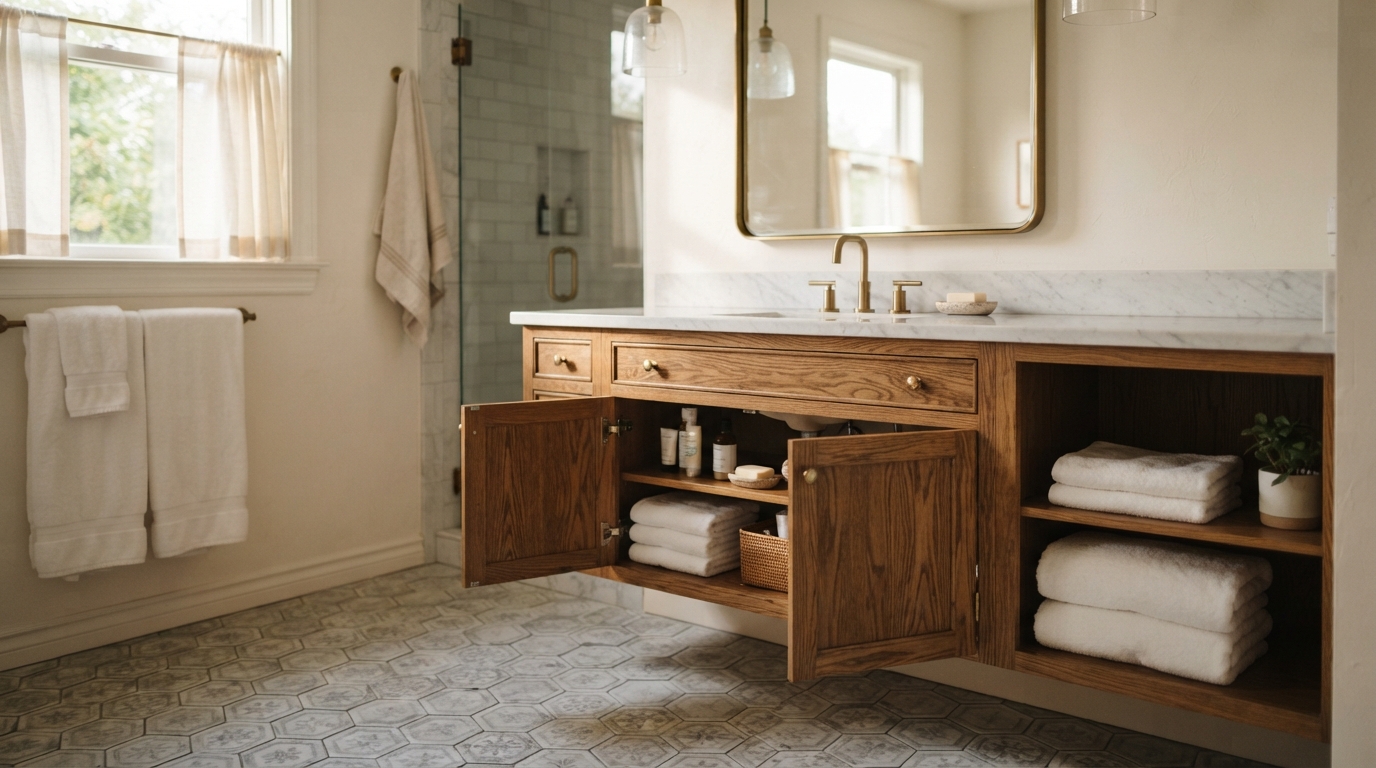
• Bathroom cabinets range from wall-mounted medicine units to freestanding vanities, each suited to different space and storage needs.
• Material choice affects moisture resistance, which matters most in humid coastal climates.
• Measuring plumbing clearance and ventilation before purchase helps avoid installation issues.
Bathroom cabinets serve as the primary storage structure in a bathroom, holding everything from toiletries to towels while anchoring the room’s layout. Selecting the right style depends on available square footage, moisture exposure, and whether the unit needs to house a sink basin or simply organize loose items.
Homeowners researching Bathroom Cabinets often compare vanity cabinets, linen towers, and medicine cabinets before narrowing down a choice that fits both the room’s dimensions and daily routines. Each category serves a distinct function, and understanding those differences makes it easier to plan a renovation or a simple swap-out project.
Common Cabinet Types and Their Uses
Bathroom cabinets generally fall into a handful of recognizable categories, each designed around a specific storage or functional need.
• Vanity cabinets: house the sink basin and plumbing while offering drawer or shelf storage below.
• Medicine cabinets: wall-mounted units, often with a mirrored door, suited to small items like toiletries and first-aid supplies.
• Linen cabinets: tall, freestanding or built-in units for towels, extra toiletries, and cleaning supplies.
• Corner cabinets: compact units that use otherwise wasted space in smaller bathrooms.
Choosing among these depends largely on the room’s footprint. A powder room may only have space for a slim medicine cabinet, while a primary bathroom can accommodate a full vanity paired with a separate linen tower.
Material Considerations for Humid Climates
Material selection plays a direct role in how long a bathroom cabinet lasts, particularly in regions with high humidity. Solid wood offers a traditional look but requires sealing to resist warping, while engineered options like thermofoil or moisture-resistant MDF tend to hold up better against daily condensation.
In West Palm Beach, FL, consistently high humidity levels make moisture resistance a practical priority rather than a cosmetic preference. According to the National Weather Service, South Florida experiences a humid subtropical climate with elevated moisture levels for much of the year, which can accelerate swelling or finish damage in cabinets built from untreated materials. Cabinets with sealed edges, moisture-resistant laminates, or marine-grade finishes generally perform better under these conditions than standard interior-grade wood products.
Measuring and Planning Before Installation
Accurate measurements prevent costly mismatches between a new cabinet and existing plumbing or wall space. Before purchasing, it helps to confirm the following:
1. Width and depth clearance around the sink drain and supply lines.
2. Door or drawer swing space relative to nearby fixtures.
3. Ventilation gaps required behind the cabinet to reduce moisture buildup.
4. Wall stud locations for secure mounting, especially for wall-hung units.
Skipping these steps is a common reason installations stall partway through, requiring rework that adds time and cost to a project.
Comparing Cabinet Styles at a Glance
|
Cabinet Type |
Typical Size |
Best For |
Moisture Resistance |
|
Vanity Cabinet |
24-60 inches wide |
Primary storage with sink |
Moderate to high with sealed finish |
|
Medicine Cabinet |
14-30 inches wide |
Small items, quick access |
High when properly sealed |
|
Linen Cabinet |
18-24 inches wide, tall |
Towels and bulk supplies |
Varies by material |
|
Corner Cabinet |
Compact, triangular |
Small or awkward spaces |
Moderate |
Business Info
Based in Lake Worth Beach, FL & Fort myers, FL, Explore Their Range of Products serves customers across West Palm Beach, FL. The business profile outlines a product catalog that includes bathroom storage options among other home fixtures and fittings.
Frequently Asked Questions
What is the typical lifespan of a bathroom cabinet? Lifespan varies by material and moisture exposure, but well-sealed cabinets in properly ventilated bathrooms generally outlast those exposed to frequent condensation without adequate airflow.
Should a vanity cabinet match other bathroom fixtures? Matching is a design preference rather than a functional requirement, though coordinated finishes on hardware and fixtures often create a more cohesive appearance.
Can an existing cabinet be refinished instead of replaced? Refinishing is possible for solid wood cabinets in stable condition, though units with significant water damage or swelling typically require replacement rather than resurfacing.
How much clearance is needed around a vanity cabinet? Most plumbing codes require a minimum clearance around the toilet and sink area, so checking local guidelines before installation helps avoid code violations.
Looking Into Storage Options
Current product listings for Explore Their Range of Products are published online for reference when comparing bathroom storage styles.