
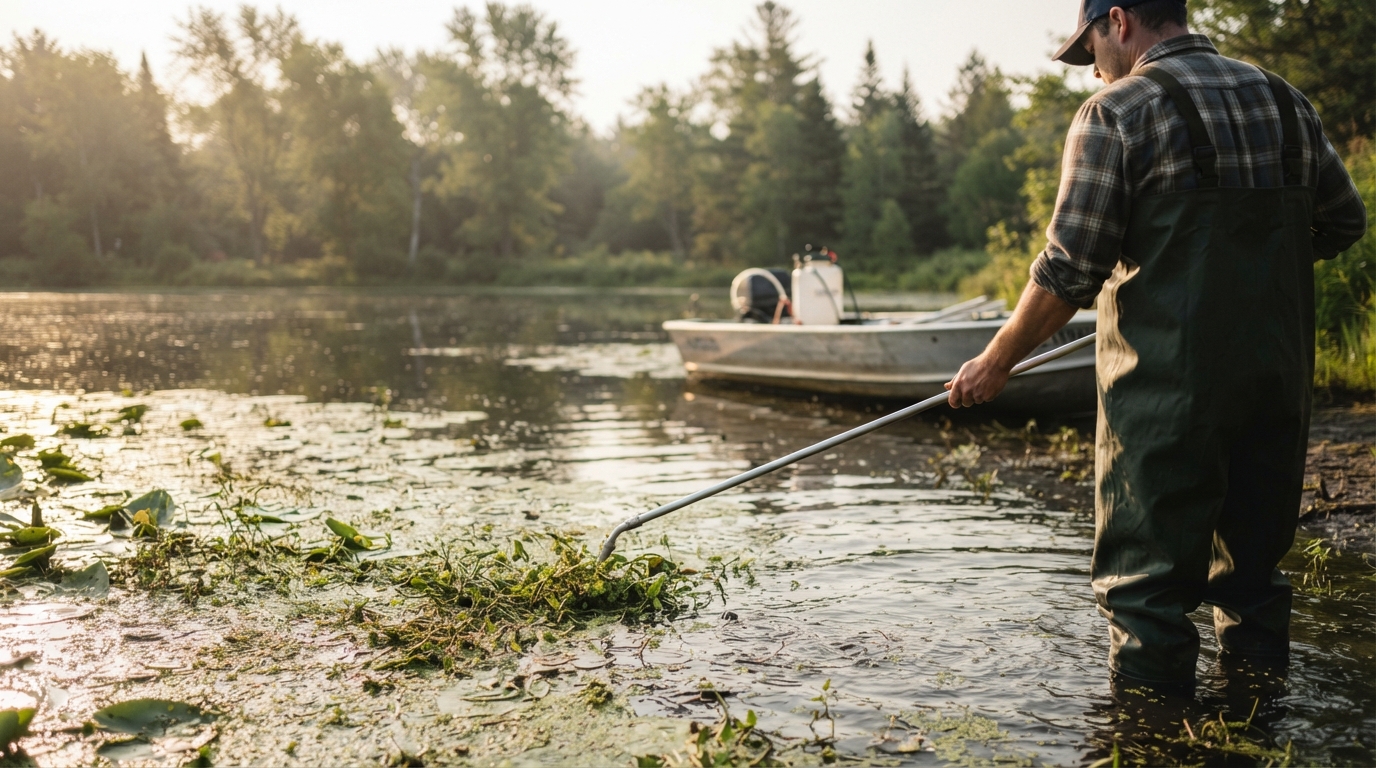
Short answer:
- Aquatic weed control uses targeted herbicides, algaecides, and mechanical methods to manage invasive plant growth in ponds and lakes without harming fish or other wildlife.
- Treatment success depends on identifying the weed species, water temperature, and matching the product to the infestation type.
- Products range from selective herbicides for specific plants to broad-spectrum algaecides for widespread algae blooms.
Pond and lake owners often notice thick mats of vegetation spreading across the water surface before they realize a weed problem has taken hold. Left unmanaged, invasive plants can choke out native species, deplete oxygen, and make a waterway unusable for fishing or swimming. Aquatic Weed Control by ProSolutions addresses this by applying EPA-registered products designed to target specific plant types while limiting disruption to the broader aquatic ecosystem.
Selective treatment matters because not every pond weed responds to the same chemistry. Aquatic herbicides offer a selective means of controlling invasive weeds without damaging the entire ecosystem, and targeting specific plant species minimizes unnecessary chemical exposure and protects beneficial organisms. This precision is what separates professional-grade treatment from generic yard-and-garden products that are not formulated for water environments.
Identifying the Weed Before Choosing a Treatment
Accurate identification is the first step in any effective control plan. Different species respond to different active ingredients, and misapplication wastes money while risking harm to fish or desirable plants.
- Submerged plants like hydrilla and watermilfoil often require systemic herbicides absorbed through the foliage.
- Floating plants such as duckweed and water hyacinth may need contact herbicides or surface-applied treatments.
- Algae blooms typically call for copper-based algaecides rather than traditional herbicides.
One widely used copper-based option is a liquid copper-based formulation containing ethanolamine chelating agents to prevent the precipitation of copper with carbonates and bicarbonates in the water, effectively controlling a broad range of algae and proven effective against the rooted aquatic plant Hydrilla verticillata. Products like this are applied once water temperatures reach a workable threshold, since application typically begins in spring as water temperature warms to 60 degrees Fahrenheit.
Chemical, Mechanical, and Biological Options
Professional pond management generally relies on a mix of approaches rather than a single method. Aquatic plant control can be done by several methods including cultural and educational approaches, physical control, mechanical control, biocontrol, and chemical control.
|
Method |
Best Use Case |
Key Consideration |
|
Chemical herbicides |
Dense submerged or floating growth |
Must match product to species and follow label rates |
|
Mechanical removal |
Large infestations needing fast clearing |
Requires specialized equipment like cutter boats |
|
Biocontrol (grass carp) |
Long-term suppression in lakes and canals |
Grass carp are very effective at aquatic weed control, and the triploid grass carp is sterile and used extensively throughout Florida for weed control in lakes and canals |
|
Hand removal |
Small, shallow, localized patches |
Labor intensive and impractical for large areas |
Chemical control remains the fastest option for established infestations. According to the U.S. Fish and Wildlife Service, herbicides are chemical agents used to kill or inhibit the growth of unwanted plants, and agencies pair them with biomass removal and monitoring as part of a broader integrated pest management strategy.
Timing and Dosing Affect Results
Even the right herbicide can underperform if applied at the wrong time or rate. Dense vegetation that dies too quickly can decompose and pull oxygen from the water, triggering fish kills.
- Apply when water temperatures and plant growth stages match product label guidance.
- Treat smaller sections at a time in heavily vegetated ponds to avoid rapid oxygen depletion.
- Always follow label recommendations for dosing. If too many aquatic weeds are blocked too quickly, this can cause fish kills from an excessive amount of rotting weeds depleting oxygen, so careful dosing must be considered and label recommendations should always be followed.
Licensed applicators also factor in product-specific action windows. Copper-based treatments, for instance, generally control planktonic algae in 24 to 48 hours and filamentous algae in 3 to 4 days.
Frequently Asked Questions
Are aquatic herbicides safe for fish and swimmers? EPA-registered products are formulated to target specific plant growth mechanisms. They are optimized to affect the unique growth mechanisms of the invasive plant without impacting native wildlife or interfering with recreational activities, and they are highly regulated by the Environmental Protection Agency and safe for non-target plants and animals when applied by a licensed applicator.
Can I remove pond weeds by hand instead of using chemicals? Hand removal works for small, shallow patches but is not practical for large infestations. Pond weed removal can be done by physically removing the plant by hand, though it is not a feasible management technique for large infestations; recurring spot treatments can help keep invasive growth at bay.
What time of year should treatment start? Many treatments begin in spring once water temperatures rise, since that is when plants resume active growth and absorb herbicides more effectively.
Does one treatment solve the problem permanently? Rarely. Most ponds need a season-long or multi-year plan combining chemical, mechanical, or biological methods depending on the weed species and infestation size.
Next Steps for Pond and Lake Owners
Keeping a pond or lake clear requires matching the right product to the specific weed or algae problem and applying it at the correct time. ProSolutions on Google Maps supplies herbicides, algaecides, and water treatment products for lawn, pest, and aquatic management needs, serving landscapers, property managers, and pond owners seeking practical solutions.