
Summary first:
• Selecting the right artificial turf material and pile height before installation is the single most important decision Chandler homeowners can make.
• Chandler’s desert climate demands UV-stabilized, heat-resistant turf with proper drainage built into the base.
• Professional installation covers site prep, grading, and infill — steps that directly determine how long the finished lawn lasts.
Choosing the right fake grass for a Chandler yard starts with understanding which turf materials and installation methods hold up under Arizona’s extreme heat and sun exposure. The wrong product installed on a poorly prepared base will flatten, fade, and fail years ahead of schedule.
If you are planning fake grass installation in Chandler AZ, the product selection and ground preparation decisions made before a single roll is laid will define the outcome. Even the best quality turf in the heaviest face weight can look unnatural if installed by a novice or an artificial turf installer who does not take the time to prepare the base properly.
What Turf Material Works Best in Chandler’s Climate
Artificial grass is made using one of three different material types: nylon, polypropylene, or polyethylene. Each performs differently under Arizona conditions, and the gap between them matters more in a desert environment than almost anywhere else.
Polyethylene is vibrantly green, soft to the touch, yet very resilient, and is especially durable when combined with nylon as a secondary thatch. For most Chandler residential lawns, polyethylene is the practical default. For a natural appearance, polyethylene looks the most like real grass, with its softness and varied blade widths.
Nylon withstands prolonged sun exposure and high temperatures best, while polypropylene degrades fastest in sunlight, and polyethylene falls in the middle for UV stability. Given that Chandler regularly sees triple-digit summer temperatures, polypropylene is the weakest choice for an outdoor lawn application.
Here is a quick comparison of the three materials for Chandler conditions:
|
Material |
Durability |
Heat Resistance |
Best Use in Chandler |
|
Polyethylene |
Medium-high |
Good |
Residential lawns, pet areas, poolside |
|
Nylon |
Very high |
Best |
High-traffic zones, putting greens |
|
Polypropylene |
Low |
Poor |
Decorative or temporary installs only |
According to the Arizona Department of Water Resources, outdoor water use accounts for a significant share of residential consumption statewide, which is one reason synthetic turf has become a practical alternative for Chandler homeowners looking to reduce irrigation demand.
Key Specs to Evaluate Before Buying
Beyond material type, three specifications separate a durable product from a disappointing one.
Pile height. Shorter pile (30-38mm) suits high-traffic areas and looks more manicured. Taller pile (40-50mm) reads as lusher and more natural but requires more infill to stay upright.
Face weight. This measures how much fiber is packed into each square yard. Higher face weight generally means a denser, more resilient product. For a Chandler backyard that sees regular foot traffic, a face weight of 60 oz or above is a reasonable starting point.
UV stabilization. Modern artificial turf uses UV-stabilized fibers and backing materials designed specifically for extreme sun exposure. Confirm this specification before purchasing — products without UV treatment will fade and become brittle within a few seasons in the Phoenix Valley.
Drainage rate. Synthetic turf is stain-resistant and permeable to allow good drainage. In Chandler, monsoon season brings sudden heavy rain, so a backing with a drainage rate of at least 30 inches per hour prevents pooling and base erosion.
The Installation Process: What Happens on the Ground
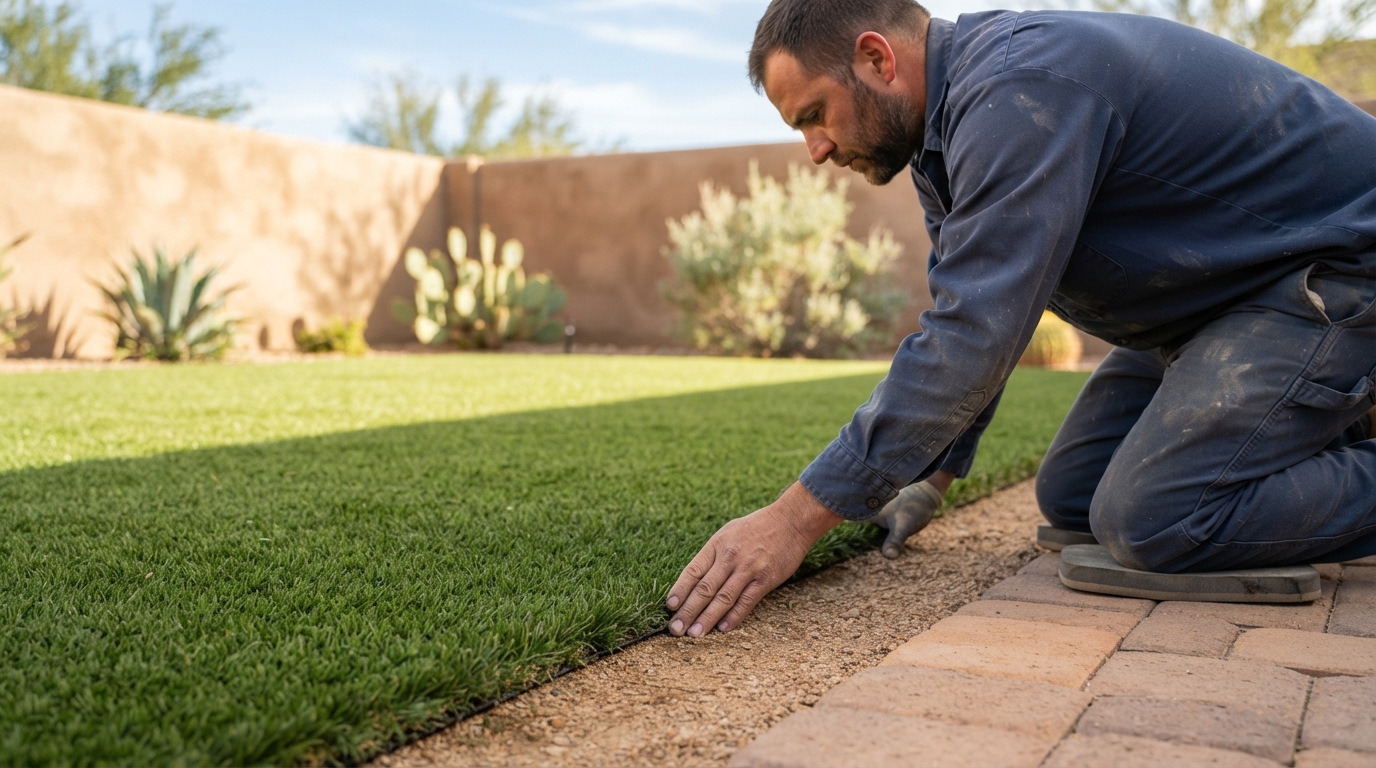
Product quality alone does not guarantee results. Experienced installers prepare the ground by removing existing vegetation, leveling the surface, and ensuring proper drainage. High-quality synthetic turf is then laid out and secured, followed by the application of infill materials to support the blades and maintain their upright position.
A proper Chandler installation typically follows these steps:
1. Excavate 3-4 inches of existing soil and vegetation.
2. Grade the area for positive drainage away from structures.
3. Compact a crushed aggregate base (decomposed granite or class II road base).
4. Install a weed barrier membrane.
5. Roll out and cut the turf, seaming sections with adhesive and staples.
6. Apply infill (silica sand, crumb rubber, or organic options) and power-brush the blades upright.
Installing artificial grass on a 1,000-square-foot lawn takes two to three days on average for a four-person crew of trained and experienced landscapers.
Working With a Local Contractor in Chandler
Services offered by local Chandler contractors include Artificial Grass Installation, Paver Installation, Travertine Installation, Outdoor Kitchens and BBQ Areas, Landscape Lighting Design, Desert Landscaping, and Stone and Rock Landscaping, with licensed and insured professionals serving Chandler and the Phoenix Valley.
Choosing a contractor who operates locally matters for several reasons. They understand Chandler’s HOA requirements, soil composition, and drainage patterns specific to neighborhoods like Ocotillo, Fulton Ranch, and Sun Groves. Bless Tierra Hardscaping is an Arizona Licensed, Bonded and Insured hardscaping and landscape contractor headquartered in Chandler, Arizona.
It is also worth noting Chandler’s rebate landscape. Artificial turf is not eligible for Chandler’s residential rebate program; while artificial turf may provide a water-saving benefit, there are potential negative environmental impacts cited by the city. However, for multi-family, HOA, and commercial properties, Chandler offers a rebate of up to $75,000 for converting grass areas to xeriscape or artificial grass. Verify current program eligibility directly with Chandler Utilities before project planning.
Frequently Asked Questions
How long does fake grass last in Chandler? With proper installation and quality materials, synthetic turf can last 15 to 20 years, even under intense Chandler sun.
Is polyethylene turf safe for pets? Polyethylene is extremely resistant to water absorption, meaning it does not retain pet odors. If you are concerned about odors, this is the material to choose.
Do I need to remove existing grass first? Yes. Artificial grass installation service typically includes general site preparation such as removing existing grass, adding weed barriers or underlayment, and closing sprinklers or rerouting irrigation.
What infill is best for hot climates? Silica sand is the standard option, but organic infill and specialized cooling infill products are available for yards where surface temperature is a priority during Chandler summers.
Ready to move forward? Bless Tierra Hardscaping offers free in-person estimates for artificial grass installation projects throughout Chandler and the greater Phoenix Valley. Reach out to discuss your yard dimensions, intended use, and material preferences before committing to a product or scope of work.